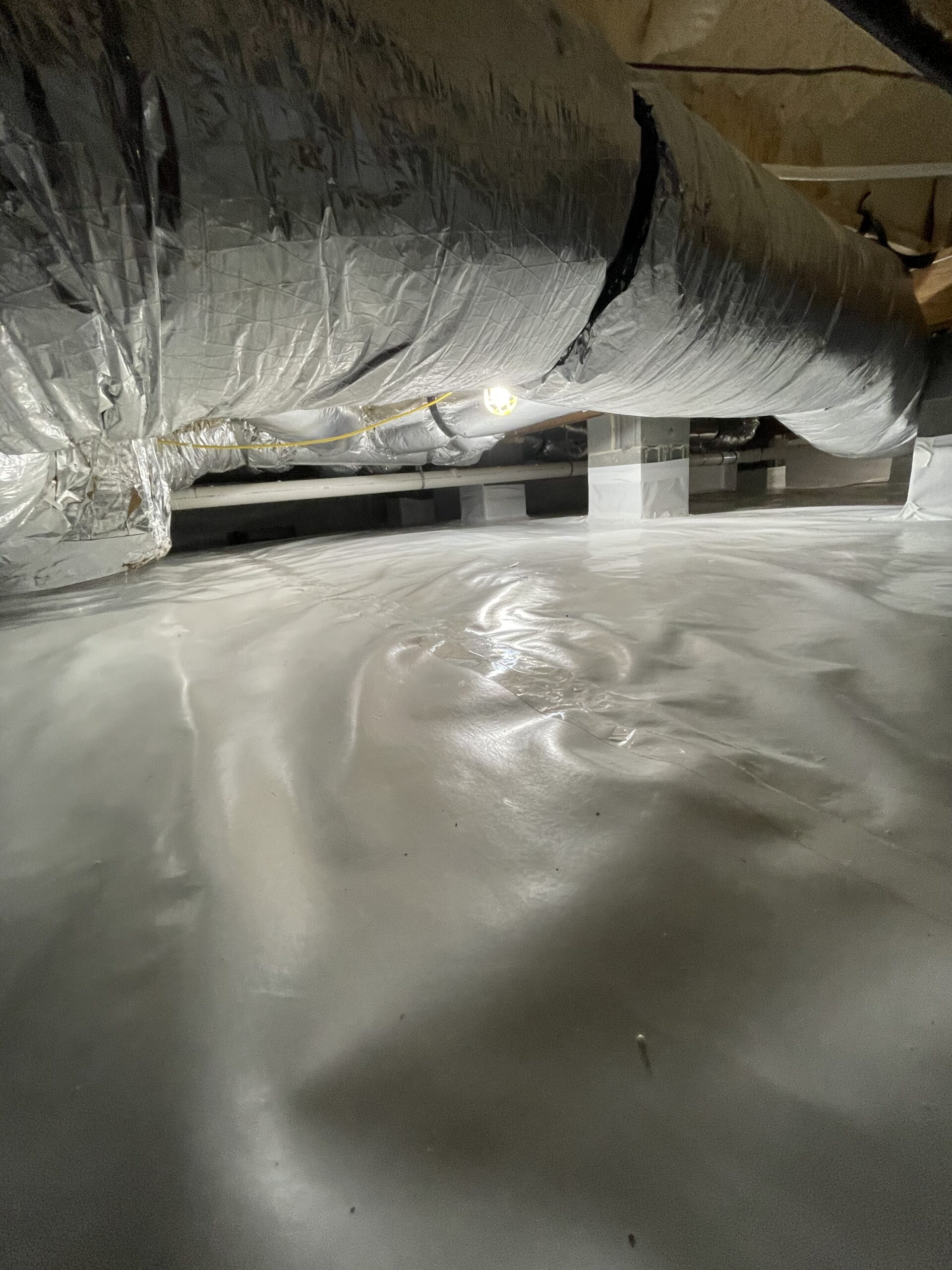
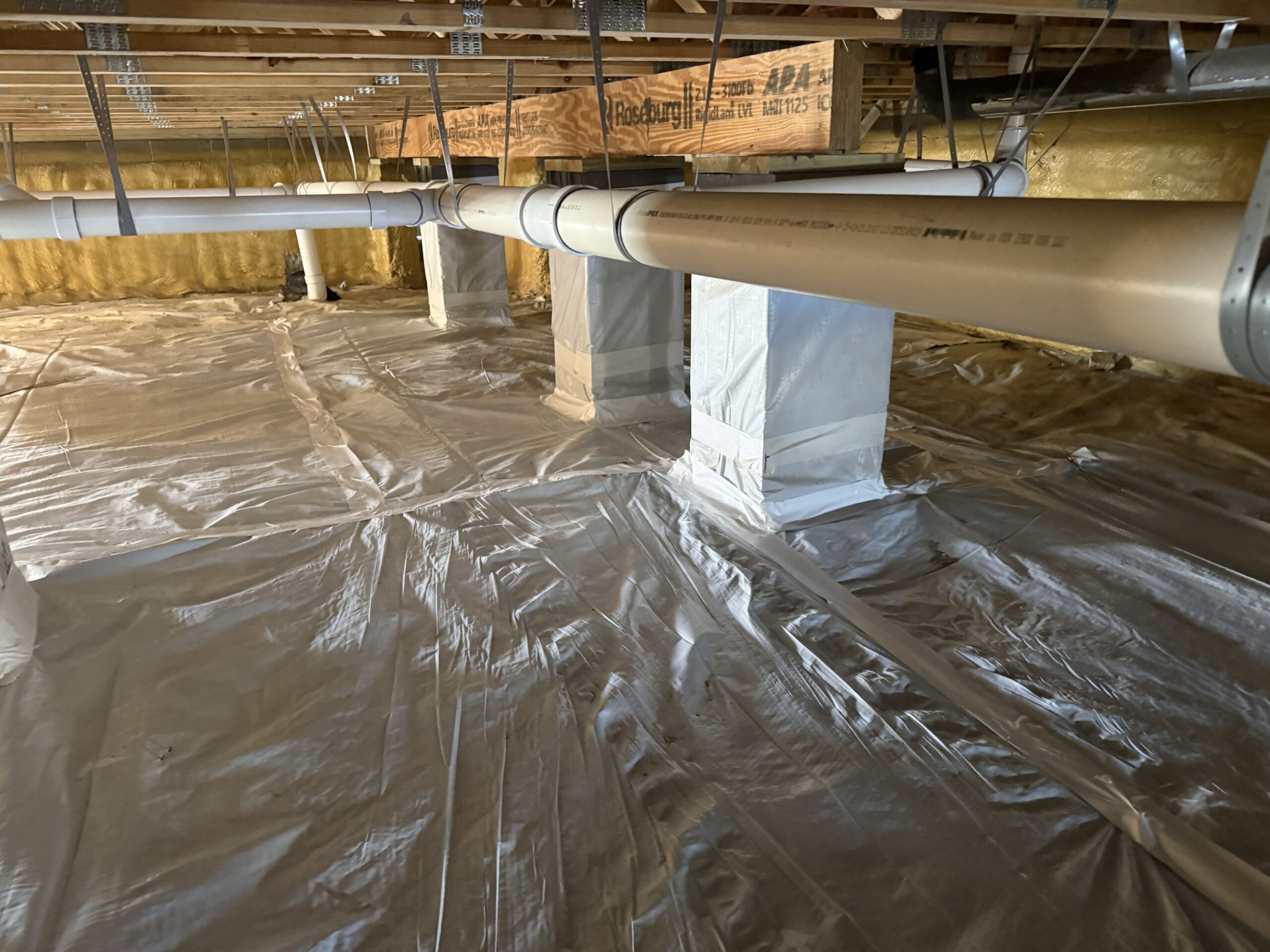
Few people like to talk about crawl spaces. This area of the home is often dirty, smelly, and infested with pests. Insulating the crawl space with spray foam can radically change this part of the house for the better.
Now, spray foam isn’t a miracle product: it won’t solve problems with standing water, or stop every determined critter from getting inside. However, spray foam insulation can deliver some great benefits it was designed for.
Let’s take a look at those benefits, and a few drawbacks, of using spray foam in your crawl space.
Pros of Spray Foam in Your Crawl Space
What features does spray foam insulation offer? Spray foam is spray-applied, and capable of creating an air barrier. Closed cell spray foam specifically can also create a vapor barrier. These qualities together help to improve energy efficiency and air quality. Let’s examine these benefits more closely.
Spray Foam Can Adhere to Stone Walls.
Almost all other insulation products are manufactured off-site and installed in the crawl space. Fiberglass batts and foam board insulation both arrive in their final form. They can be cut to size, but that’s the shape those insulations will take.
Spray foam, on the other hand, is a spray-applied product. This spray-application is incredibly helpful for crawl spaces with irregular walls. A concrete or masonry wall doesn’t have to worry about crevices and irregular designs. Foam boards can fasten to those walls without issue. But a stone wall needs the flexibility of spray foam insulation.
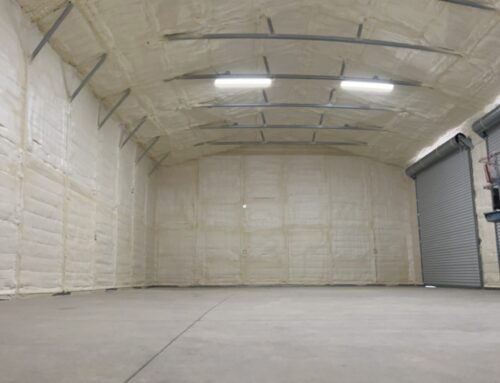
No matter the bumps or ridges, spray foam insulation is sprayed in place and perfectly seals up the crawl space walls. This feature eliminates cracks and crevices for air, vapor, and pests.
Spray Foam Offers an Air-Seal and Vapor Barrier.
Both open cell and closed cell spray foam can create an air-seal. For open cell, the airtight seal is available with approximately 3.5 inches of foam. With closed cell, the air-seal is available with approximately an inch of spray foam. This airtight seal prevents air leakage. Wherever the foam is installed, the line of your thermal envelope is drawn.
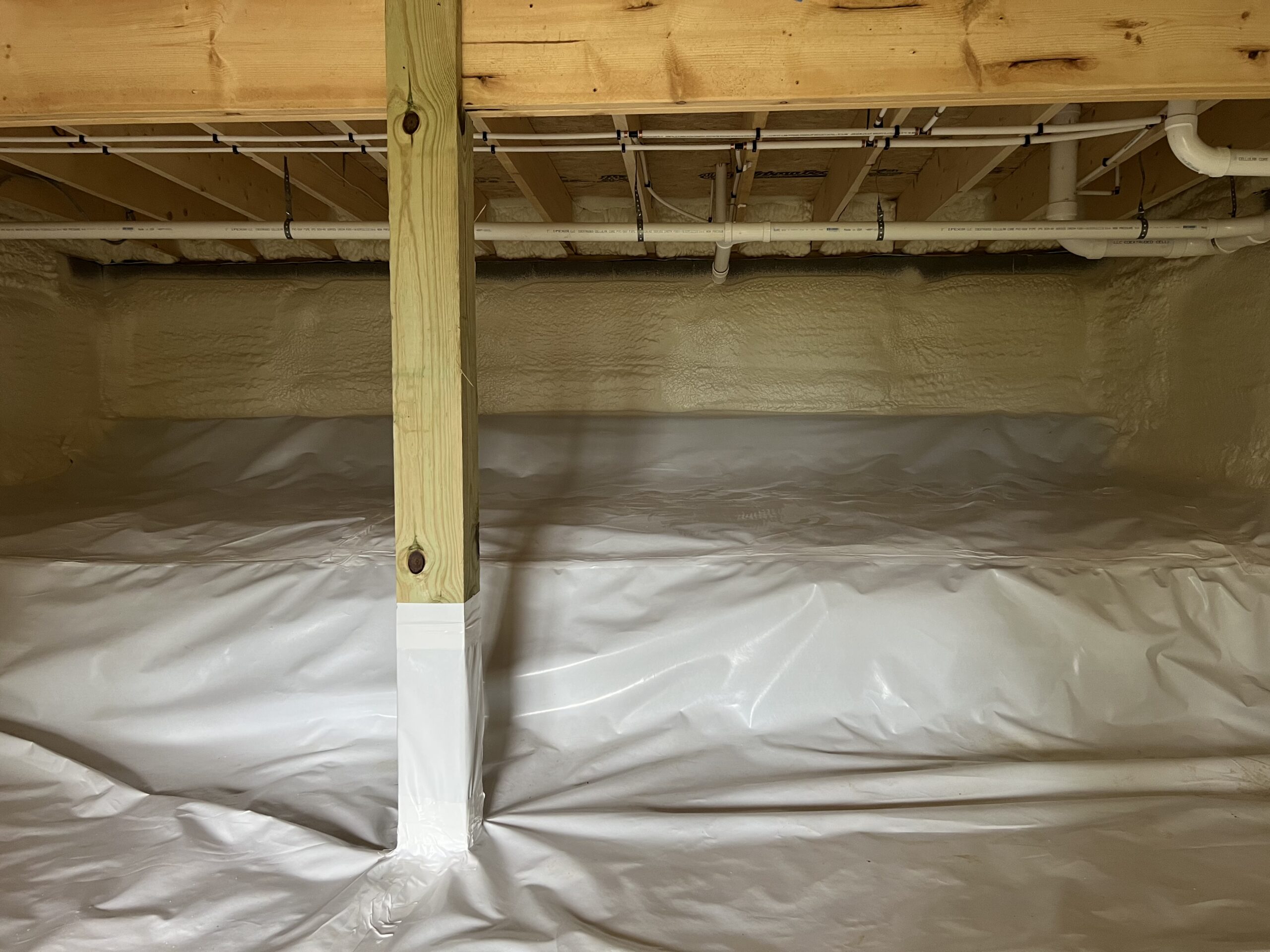
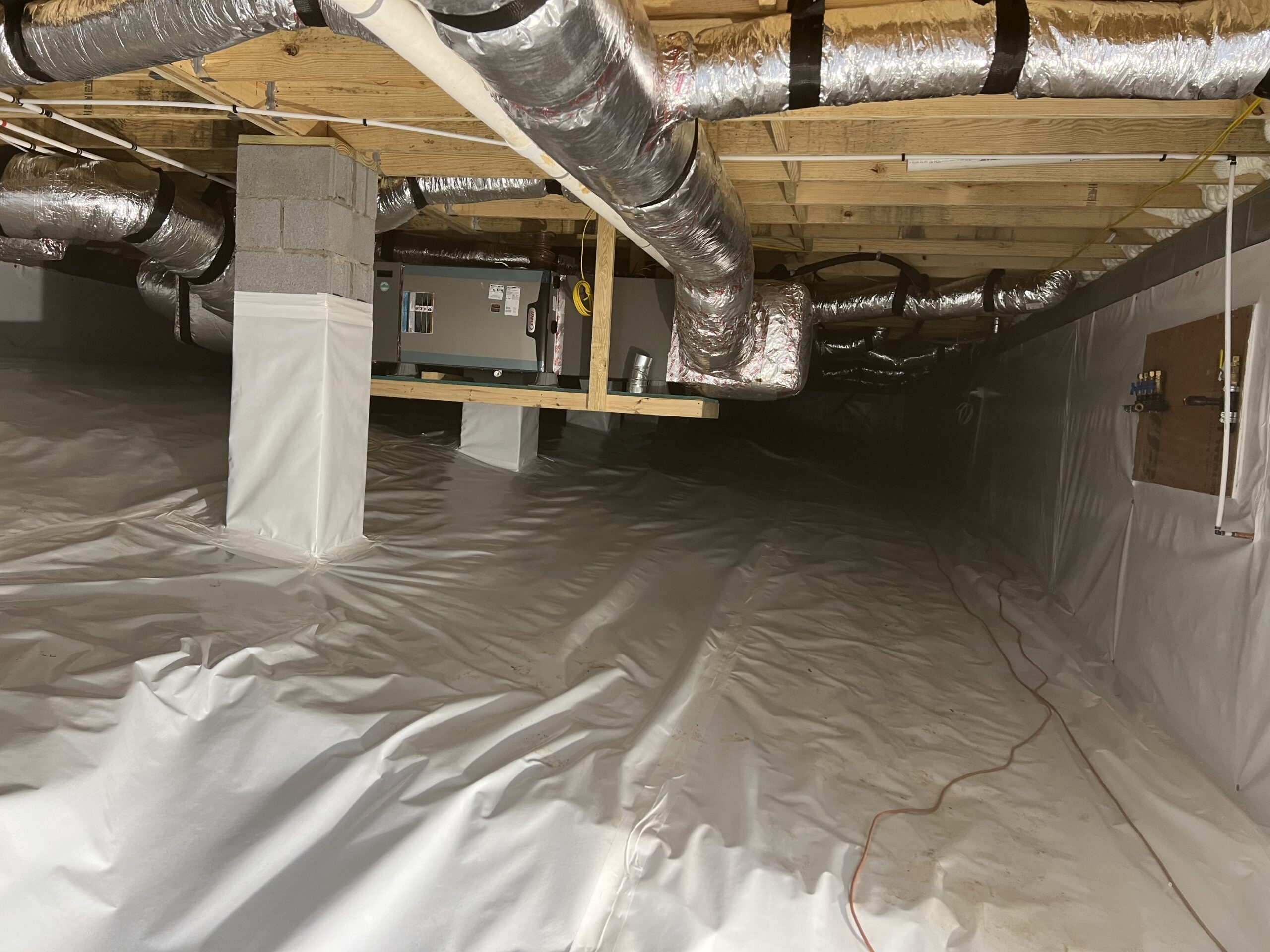
With a crawl space encapsulation, the crawl space is part of your conditioned space. Air leakage between the outside and your crawl space is stopped. If you opt to insulate the crawl space ceiling instead, the air barrier helps to stop crawl space air from infiltrating your home.
Closed cell spray foam can also create a vapor barrier, at approximately 2 inches of depth. This vapor barrier is critical for crawl space encapsulation. The vapor barrier helps to manage moisture in the crawl space, when working in tandem with a dehumidifier.
When insulating the crawl space ceiling in the South Carolina climate, a vapor barrier is less vital. However, we would never recommend open cell spray foam for a crawl space with standing water issues or run-off potential. For some homes in South Carolina, open cell is a reasonable option for insulating the crawl space ceiling. Have one of our estimators visit your property to discuss your options in detail.
Spray Foam Will Improve Air Quality in Your Home.
Whether you opt for encapsulation or ceiling insulation, the air quality in your home will improve.
With an encapsulation, your crawl space joins the rest of your home as part of the conditioned space. The crawl space air is free to circulate. But because of the encapsulation, the air is no longer dirty and humid. It is conditioned, just like the rest of the house.
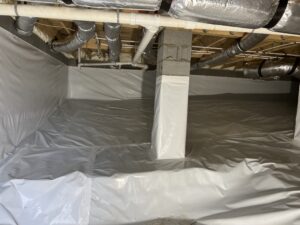
If you choose spray foam in the crawl space ceiling, the air barrier effectively cuts off the crawl space from your living space. It doesn’t matter if the crawl space air is humid or dirty, because it cannot get into your home.
Spray Foam Will Increase Energy Efficiency.
Eliminating air leakage is good for both air quality and energy efficiency. Random uncontrolled air leakage can increase the strain on your HVAC system, as it combats an influx of unconditioned air.
The airtight seal from spray foam helps your HVAC equipment to perform better, and makes it more affordable to keep your home comfortable.
Cons of Spray Foam in Your Crawl Space
From a performance perspective, there isn’t really a drawback to spray foam in the crawl space. It is a highly efficient option that uniquely solves some crawl space problems. Still, there are a few identifiable cons to using spray foam in your crawl space.
Spray Foam Is More Expensive.
There are more affordable crawl space solutions. These solutions are less effective long-term, but are also less expensive upfront. Encapsulation and spray foam in the crawl space ceiling are both pricier choices.
Spray foam is a more expensive product than fiberglass batts, which are traditionally installed in a crawl space. However, the price difference may not be as significant as you’d think. Reach out to a qualified installer to get a quote. Spray foam in your crawl space may be within your budget, with or without financing options.
Spray Foam Needs a Qualified Installer.
The key is to work with a qualified installer. There are technically no requirements, training, or certifications to start a spray foam company. As a homeowner, it can be difficult to know which businesses are legitimate without these clear markers.
One rule of thumb is to only work with someone who is insured. It is also a good practice to get multiple spray foam quotes, so you can clearly identify if someone is pricing their work for less than it is worth. Many companies without training price lower than all their competitors, which can be tempting.
However, your goal is safe and effective insulation in your crawl space. You want lower energy costs and better air quality. The only way to achieve these things is by working with an installer who knows what they’re doing.
Spray foam is an amazing insulation product, and offers great results for what it is designed to do—but only when it is installed correctly. That installation involves a chemical reaction with several variables. A qualified installer can manage those variables to deliver a safe and inert product. If the installer doesn’t know what they’re doing, the finished product may fail to adhere, and could off-gas indefinitely.
Spray Foam Needs Dehumidification in the Crawl Space.
When you seal up a crawl space with spray foam encapsulation, you need to control the humidity. This is easily accomplished with a dehumidifier. However, not all spray foam contractors may provide or disclose the need for a dehumidification system in the crawl space.
There are crawl space-specific dehumidifiers available for purchase. These machines help to maintain the humidity level in the crawl space, preventing excessive moisture from passing into your living space.
Spray Foam in the Crawl Space Can Require a Termite Inspection Gap.
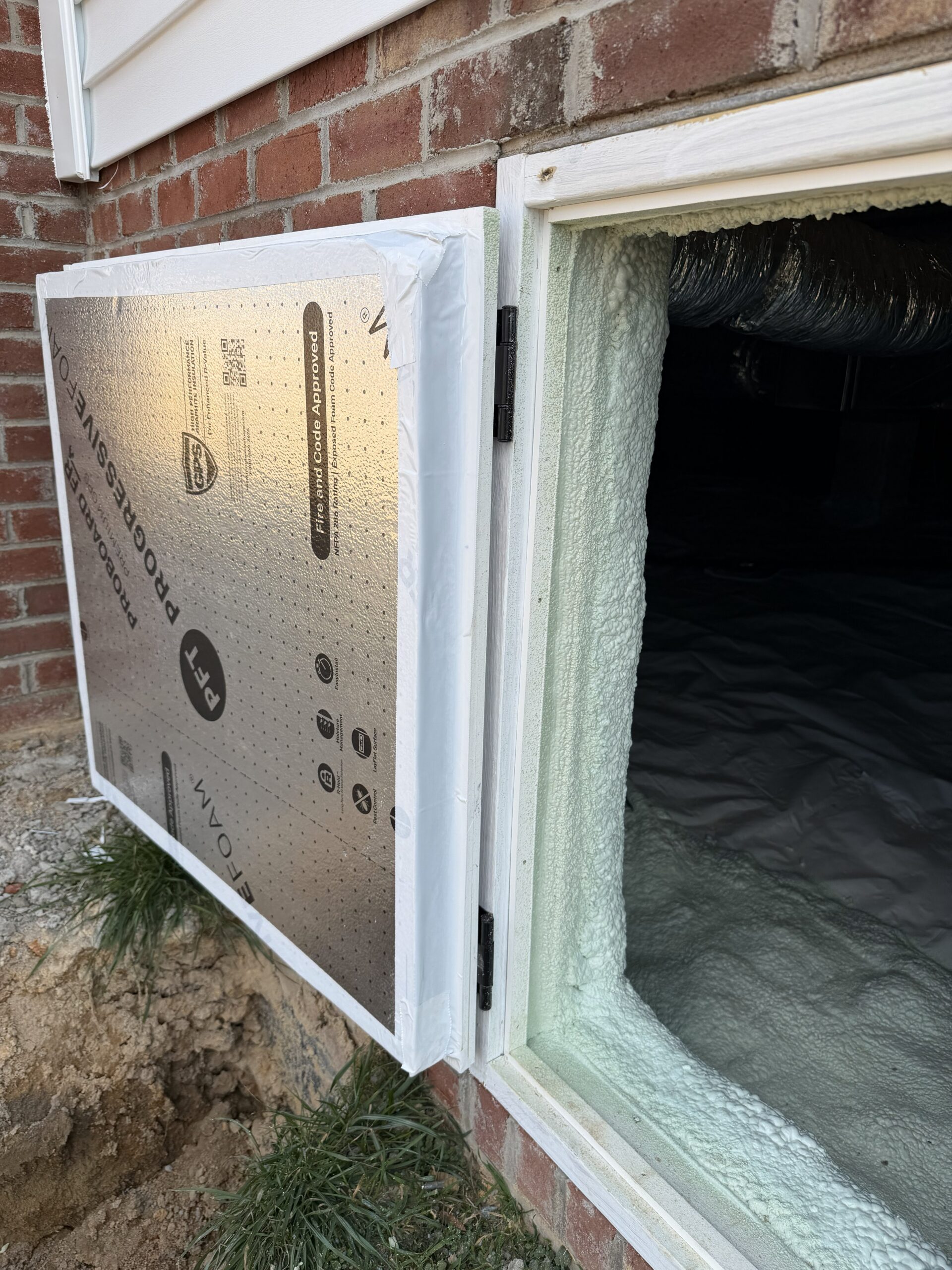
In the Carolinas, encapsulated crawl spaces feature a termite inspection gap. These support the pest control efforts in a home, as foam insulation can hide termite activity. By providing a band around the entirety of the crawl space, pest control specialists can more easily identify possible termite activity.
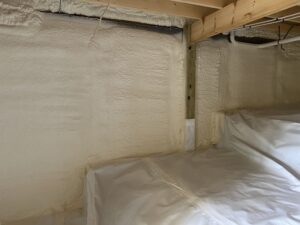
This termite inspect gap isn’t relevant for other crawl space insulation methods, like fiberglass. When using spray foam, these inspection gaps are vital and part of the installation in a Carolina home. Your installer didn’t forget to spray a section of the band boards!
Consider a Spray Foam Upgrade for Your Crawl Space.
Every home is unique. The best way to choose a home improvement is to talk with a professional. Our team at A-1 Insulation would be more than happy to visit your property and discuss your options. We can create a plan for your home and crawl space, based on your specific goals.
Call us at (864) 501-0628 or fill out a form on our website. We’ve serviced areas of North and South Carolina for over fifteen years.